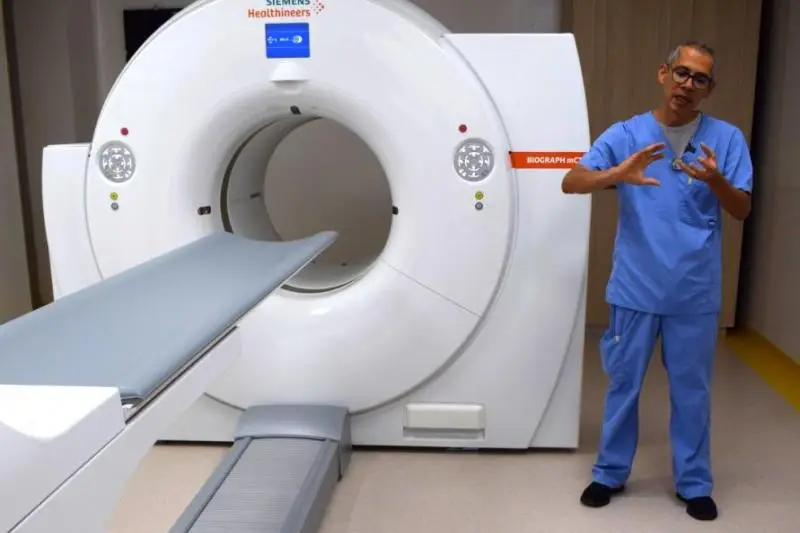
With the launch of its nuclear medicine service, Clinaltec brought to the center of the country a type of diagnosis that until then forced patients in the region to travel to the major capitals.
Nuclear medicine is a discipline that works with radiopharmaceuticals: radioactive substances in controlled doses that, once inside the body, allow the functioning of organs and tissues to be seen, not just their shape. That difference is what gives precision to oncological diagnosis—allowing tumor activity to be detected before it is visible by other methods, and to measure with exactness whether a treatment is responding.
What changes for the patient
Before the service existed in Ibagué, a patient from Tolima who needed a PET scan had to schedule the study in Bogotá, travel while fasting, wait for the radiopharmaceutical administration, and return the same day or stay overnight. For a cancer patient undergoing treatment, that travel is not just a procedure: it is an exhaustion that adds to that of the illness.
Dr. José Mosquera, a specialist in Nuclear Medicine and head of the project at Clinaltec, has noted that the service incorporates both PET diagnosis and hospital therapies with radiopharmaceuticals, and that the unit was conceived from the beginning with standards comparable to those of centers in the country's major capitals.
Nuclear medicine is integrated with the rest of the institution's cancer care pathway: the same patient diagnosed here continues with surgery, chemotherapy, radiotherapy, or immunotherapy without changing locations.
The event in the media
The arrival of the nuclear medicine service in Tolima was covered by El Nuevo Día.
The New DayTolima will have a major nuclear medicine complexJuly 20, 2023
This article was written by Clinaltec S.A.S. using its own information. The links lead to the original publications of each media outlet.